



Why I Keep Going Back to Solscan: A Hands‑On Guide to Solana Exploration and Analytics
Whoa! First off — if you’re deep in Solana, you need a trusty explorer. Seriously? Yep. I mean, some tools look shiny but don’t tell you the good parts. My gut said Solscan early on; then I actually started using it day-to-day and things clicked. Initially I thought it was just a prettier UI for the same data. But then I realized the difference is in the details — decoded instructions, token holder breakdowns, and quick program insights that save time when something weird pops up.
Here’s the thing. When a transaction goes sideways, you want clarity fast. Short hops. Clear traces. Solscan surfaces inner instructions and runtime logs in a way that feels deliberate, not accidental. My instinct said “this will be handy” and it was. (Oh, and by the way… I once debugged a stuck NFT mint using only the explorer and a dev RPC — saved a headache.)
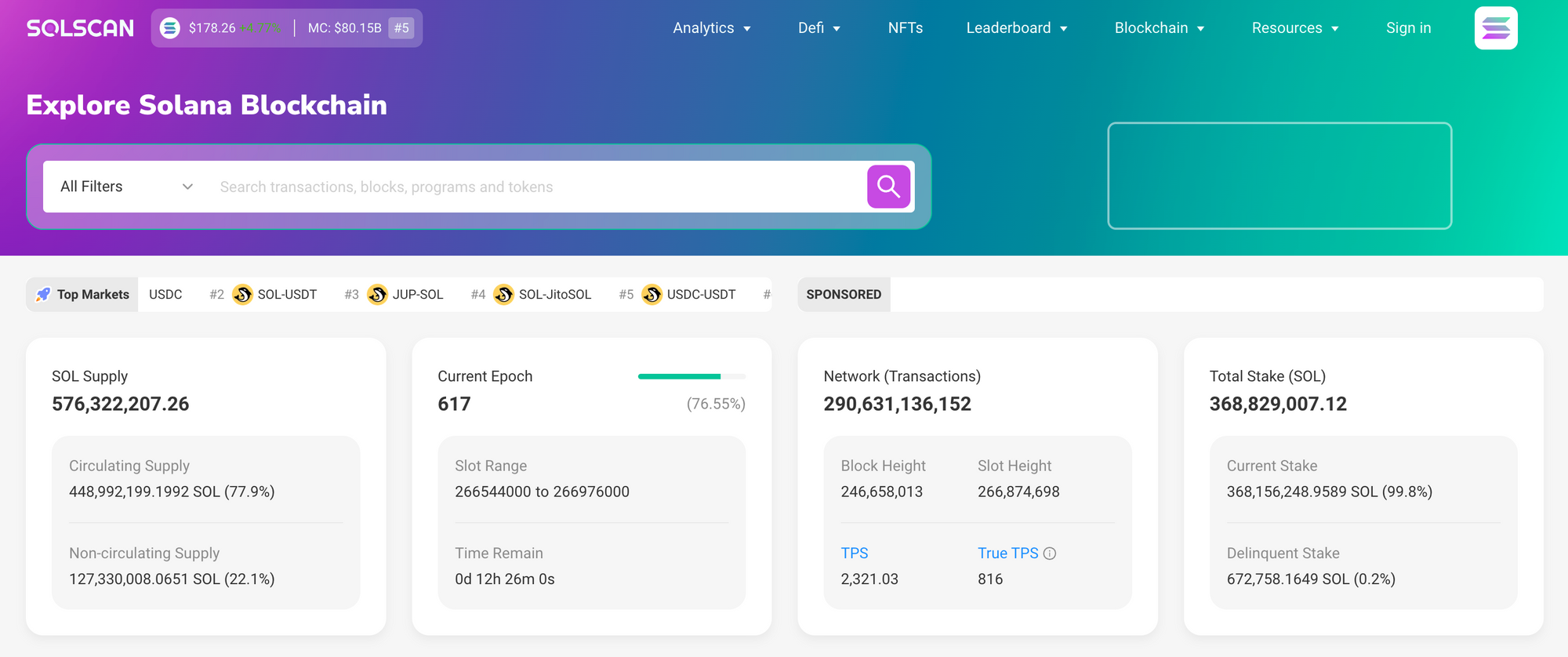
How Solscan helps you read Solana like a pro
Start simple: paste an address or tx signature into the search bar. Boom — you see activity, balances, and staking if present. Short note: watch for cluster selection (mainnet-beta vs testnet). Medium thought: confirmations and finalization matter; a “confirmed” status isn’t always final until it’s “finalized”, and Solscan shows those states so you can judge risk. Longer view: for developers and power users, the decoded instruction stream and program logs let you reconstruct what happened inside complex transactions that call multiple programs, and that is where you go from curious to decisive — you can tell if funds were moved by an instruction you expected, or by a malicious inner call, and that distinction changes the whole response strategy.
Transaction inspection is more than a timestamp. You see consumed compute units, fee lamports, instructions by program (Serum, Metaplex, Raydium, etc. — names here for context), and inner transfers. That layered view helps when verifying token mints or following suspicious flows. Something felt off about a token I was checking, so I dug through holders and found a tiny wallet with outsized transfers — red flag. Honestly, that part bugs me: scams hide in plain sight sometimes, very very small manipulations but huge impact.
Token analytics on Solscan deserve a paragraph. You get holder distributions, supply changes, and transfer frequency. For projects, this helps spot centralization risk (one wallet holding >50% supply) and possible rug patterns. For traders, holder count growth and recent whale movements can be leading indicators. I’m biased, but I prefer seeing the raw holder list and timestamps rather than a single green chart — it gives context.
Developers: Solscan’s program pages are gold. You can view transactions invoking a program, recent upgrades (if any), and where trouble clusters. Initially I thought “I’ll just use RPC logs.” Actually, wait—let me rephrase that: RPC logs are great, but Solscan filters and organizes them in a way that’s much faster for triage, which matters under pressure. On one hand you want raw data; on the other hand you need curated insight. Solscan tries to be both.
API users, listen up. Solscan provides endpoints for address history and token metrics, which work for dashboards and automated alerts. On the downside, heavy API users should watch rate limits and consider caching because repeated lookups for the same token or wallet can be wasteful. Hmm… remember that local caching strategy? It saves credits and latency.
Practical checks I run every time
1) Verify the mint address. Don’t trust token names.
2) Check holder concentration — if 1-2 wallets own most supply, tread carefully.
3) Inspect recent txs for abnormal patterns — sudden airdrops, dusting, or liquidity pulls.
4) Look at token creation & supply changes — burns/mints reveal intentions.
5) Use the program/tab view to see which programs interact with the token — unexpected programs are suspicious.
I’ll be honest: none of these are foolproof, but together they reduce surprise. On one occasion, my instinct said a token was legit because of an official tweet; then Solscan showed a recently created mint address that didn’t match the announcement — red alert. Lesson: verify addresses, not assertions.
Another practical tip — use CSV export for holder lists when doing deeper audits. It’s clunky, but effective. Also, if you’re tracking NFT mints or trades, the NFT tabs and collection pages are useful for spotting bulk transfers and wash trading patterns.
Limits and tradeoffs
Okay, caveat time. Solscan is powerful, but not infallible. Some parsed data depends on heuristics; rare edge-case opcodes or new program versions might not decode perfectly. On one hand you’ll get quick clarity; though actually, sometimes you need raw RPC or a local node to reproduce exact states. Also, privacy is limited — explorers make transactions discoverable (that’s the point), so don’t assume anonymity if you’re moving funds linked to a public identity.
Performance-wise, Solscan is fast, but during high congestion you might see delays in indexing; that’s when cross-checking with a different explorer or node can confirm whether an issue is on the network or with the indexing layer. I’m not 100% sure how often their indexer lags, but it’s rare enough that you notice immediately when it happens.
Security note: never trust a token just because it has a nice web page. Check the on‑chain mint and liquidity. If liquidity is in a single wallet or in a pool that recently withdrew funds, treat it as high risk. Tools like transaction tracing and holder snapshots are your friends here.
FAQ
How do I confirm a transaction is finalized?
Look for “Finalized” status on the transaction page. Short answer: finalized means the cluster has rooted the block. Medium: confirmed vs finalized shows differing guarantees; wait for finalized if you need strong finality. Longer note: in rare network reorganizations, confirmed-only txs may be rolled back, so for large transfers wait for finalization.
Can Solscan detect scams automatically?
Not fully. It highlights suspicious indicators — like newly created mints or concentration in wallets — but you need human judgment. Use holder analysis, program inspection, and cross-reference known project mints. My instinct helped once; the chain data closed the loop.
Is the Solscan API suitable for production dashboards?
Yes, with caveats. It’s useful for analytics but be mindful of rate limits and potential short-term indexing delays. Cache aggressively. For mission-critical needs, consider a dedicated RPC provider plus Solscan for rich metadata and quick lookups.
Okay, so check this out — if you want a practical next step, bookmark the solscan explorer official site and try these checks on a token you care about. Try tracing a small tx end-to-end: watch logs, decoded instructions, and holder changes. You’ll learn faster by doing than by reading. My parting thought: tools only amplify judgment; use them to make smarter, not faster, decisions. Somethin’ to chew on…